
2026-10-05
Building a Proactive AI Desktop Robot, by Latisha Besariani Hendra
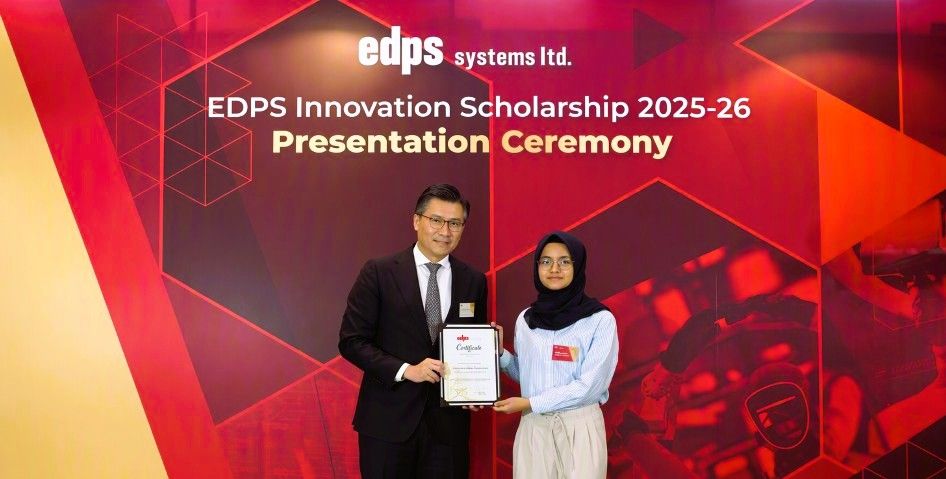
EDPS is pleased to recognise Latisha Besariani Hendra, a Computer Science student at City University of Hong Kong, as one of the joint highest-scoring awardees of the EDPS Innovation Scholarship 2025/26.
Her project, TARS: A Low-Latency Proactive Cognitive Framework for Embodied Assistants, explores a new way for people to interact with voice-enabled AI. Most voice assistants wait for a wake word or direct command. TARS instead monitors speech for signs of hesitation or confusion and can offer assistance without waiting to be asked.
At the centre of the project is CASE, the Cognitive Assistance and Situational Engine, deployed on a desktop robot built for under US$200. The system looks for cues including extended silence, hesitation words and direct expressions such as “I’m stuck”. A large language model evaluates the context, while a separate deterministic gate helps prevent unnecessary interruptions when users are thinking aloud.
The architecture combines a Raspberry Pi 5 hardware node with a separate AI processing host. To create a more natural interaction, Latisha optimised the system for rapid speech recognition, AI reasoning and voice generation. The reported evaluation achieved median processing latency of 703 to 808 milliseconds and end-to-end latency of 961 to 1,302 milliseconds. In tests involving eight participants, 61% of the proactive interventions were judged appropriately timed.
The study also identified important risks. The language model occasionally repeated users’ words without adding useful information, exposed internal reasoning in spoken responses or produced answers that were too long for the situation. These findings suggest that proactive assistants should combine generative AI with clear, rule-based safeguards rather than relying on prompts alone.
Latisha has released both the CASE software and TARS hardware platform as open-source projects. This allows other researchers, educators and developers to examine the design and build upon its findings.
The project demonstrates the potential of proactive embodied AI to support learning, accessibility and everyday tasks. Just as importantly, it recognises the need to balance timely assistance with user autonomy, privacy and responsible system behaviour.
Through TARS, Latisha presents an engaging vision of AI that does not simply wait for instructions, but can recognise when thoughtful assistance may be helpful.



EDPS Systems Limited EDPS 電腦系統有限公司 EA Licence No. 82149
© Copyright of EDPS Systems Limited 2026. All Rights Reserved.